
Catàleg general VIH

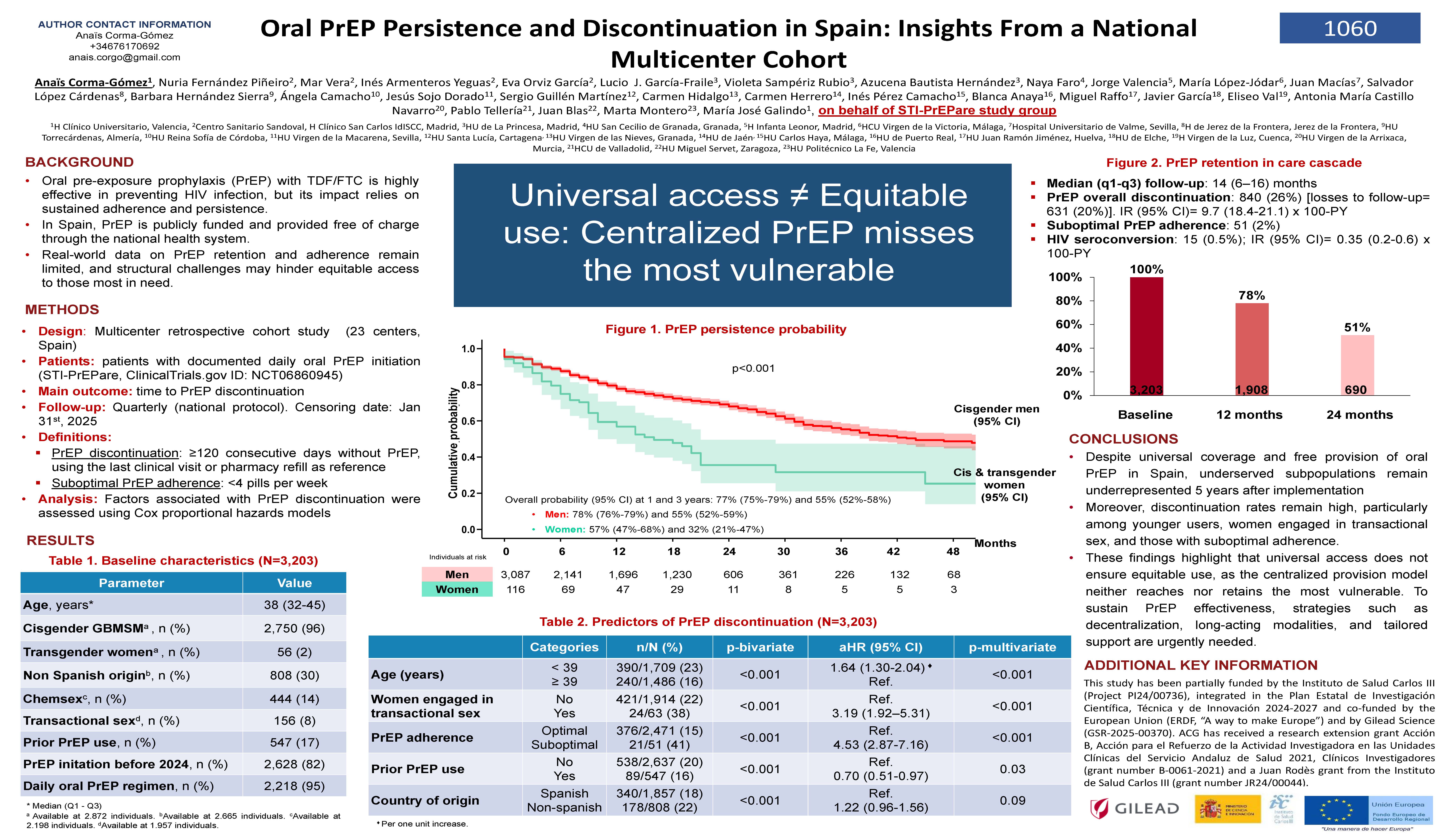
Oral PrEP persistence and discontinuation in Spain: insights from a national multicenter cohort

Resum
Background: Oral pre-exposure prophylaxis (PrEP) with TDF/FTC is highly effective in preventing HIV infection, but its impact relies on sustained adherence and persistence. In Spain, PrEP is publicly funded and provided free of charge through the national health system. However, real-world data on PrEP retention and adherence remain limited, and structural challenges may hinder equitable access to those most in need. Methods: Retrospective cohort study (STI-PrEPare, ClinicalTrials.gov NCT06860945) including all individuals with documented initiation of daily oral PrEP in 23 Spanish centers between 2019–2024. Discontinuation was defined as =120 consecutive days without PrEP, using the last clinical visit or pharmacy refill as reference. Suboptimal adherence was defined as <4 pills per week. The primary endpoint was time to discontinuation. Factors associated with PrEP discontinuation were assessed using Cox proportional hazards models. Results: A total of 3,203 individuals initiated PrEP, with 2,628 (82%) initiating prior to 2024. Of these, 2,750 (86%) were cisgender GBMSM, 808/2,665 were of non-Spanish origin, 444 (14%) reported chemsex, and 156/1,957 reported transactional sex. Median (Q1–Q3) follow-up was 14 (6–16) months. Fifteen HIV seroconversions occurred (0.5%). Suboptimal adherence was observed in 51 (2%) participants. Overall, 631 (20%) were lost to follow-up, with median time to discontinuation of 8 (3–14) months. Retention was 78% at 12 months and 51% at 24 months. The cumulative probability of discontinuation at 6, 12, and 18 months was 8.8% (95% CI, 7.8–9.8), 16.4% (95% CI, 15.0–17.8), and 20.6% (95% CI, 19.0–22.0), respectively. In the multivariate analysis, younger age (<39 years, HR=1.64; 95% CI 1.30–2.04), suboptimal adherence (HR=4.53; 95% CI 2.87–7.16), and female participants engaged in transactional sex (HR=3.19; 95% CI 1.92–5.31) were independently associated with discontinuation. Conclusions Despite universal coverage and free provision of oral PrEP in Spain, underserved subpopulations remain underrepresented 5 years after implementation. Moreover, discontinuation rates remain high, particularly among younger users, women engaged in transactional sex, and those with suboptimal adherence. These findings highlight that universal access does not ensure equitable use, as the centralized provision model neither reaches nor retains the most vulnerable. To sustain PrEP effectiveness, strategies such as decentralization, long-acting modalities, and tailored support are urgently needed.- Tema:
Autoria:
CORMA GÓMEZ, Anaïs; ORVÍZ GARCÍA, Eva; FERNÁNDEZ PIÑEIRO, Nuria; PUERTA LOPEZ, Teresa; GARCÍA-FRAILE FRAILE, Lucio Jesús; BAUTISTA HERNÁNDEZ, Azucena; FARO, Naya; VALENCIA LA ROSA, Jorge; GÓMEZ AYERBE, Cristina; GIL CIDONCHA, Sara; MURILLO PINEDA, Marina; HERNÁNDEZ SIERRA, Bárbara; CAMACHO ESPEJO, Ángela; SOJO DORADO, Jesús; GALINDO, Pepa
Fitxa bibliogràfica
- Any de publicació:
- 2026
- Descripció física:
- [1] p.
- Format:
- Fulletó
- Tipus de document:
- Col·loquis i ponències
- Notes:
- Póster presentado en la CROI (Conference on Retrovirus and Opportunistic Infections) celebrada en Denver (Estados Unidos) del 22 al 25 de febrero de 2026.
- Més informació:
-
Continguts relacionats
També et pot interessar
-
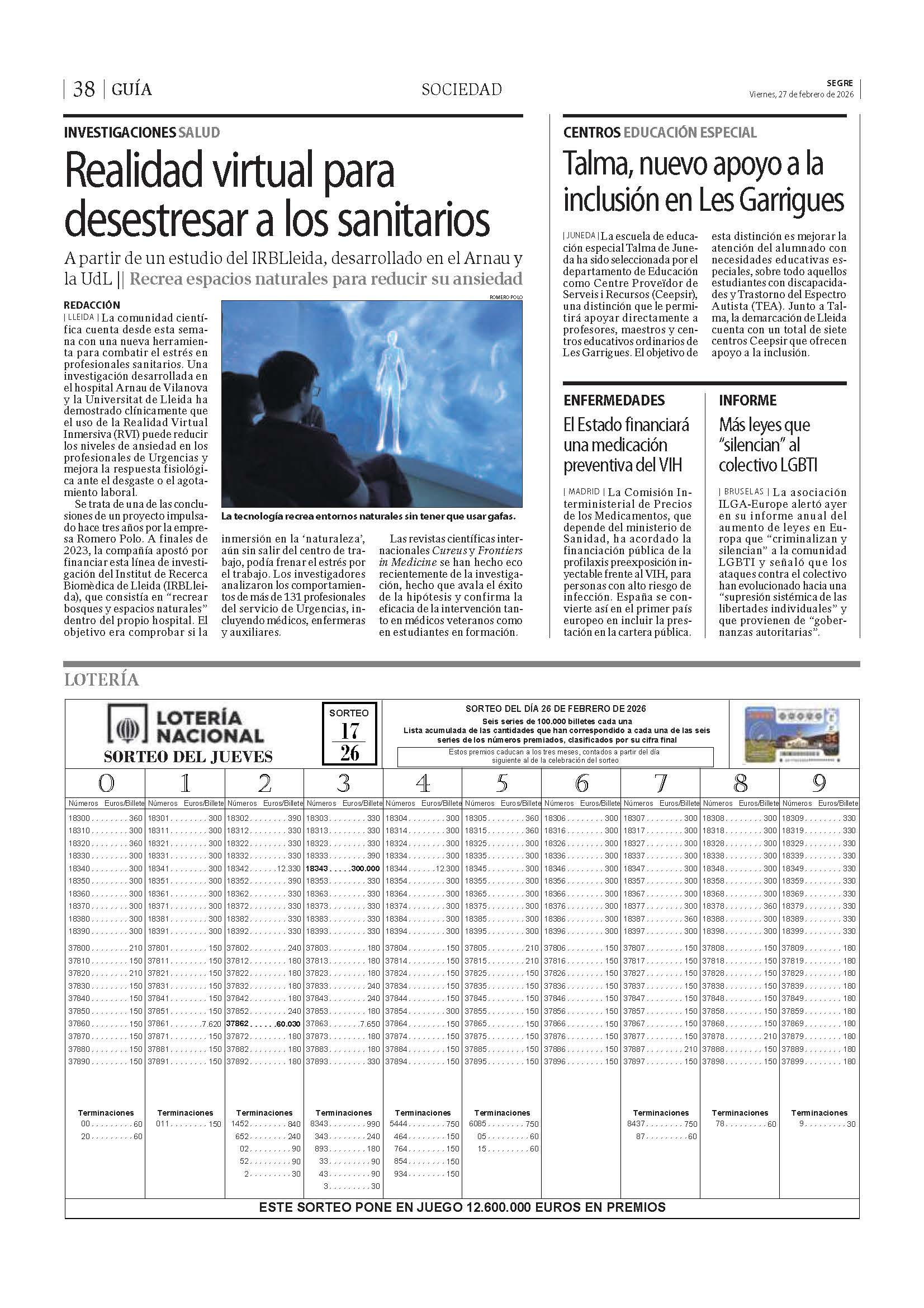
El Estado financiará una medicación preventiva del VIH
-
Sistema de información de programas de profilaxis pre- exposición al VIH en España (SIPrEP). Informe de resultados noviembre 2019- mayo 2025
-
Sistema de información de programas de Profilaxis Pre- exposición al VIH en España (SIPrEP). Informe de resultados noviembre 2019- mayo 2024