
Catálogo general VIH

El fenómeno chemsex en Andalucía: estudio transversal desde la perspectiva de usuarios y profesionales sanitarios

Resumen
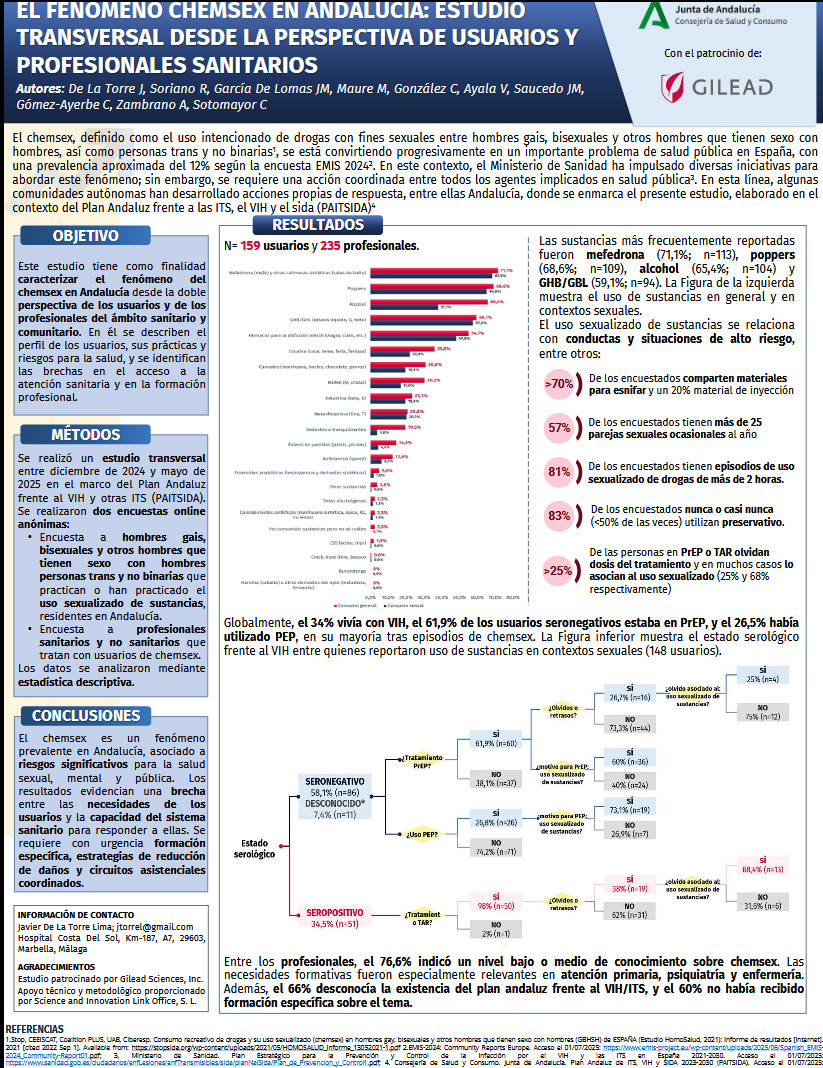
Objectives: This study aimed to characterize the chemsex phenomenon in Andalusia from the dual perspective of users and community sector professionals. It describes the profile of users, their practices and health risks, and identifies gaps in healthcare access and professional training. Methods: A cross-sectional study was conducted between December 2024 and May 2025 within the Andalusian HIV and STI Strategic Plan (PAITSIDA). Two anonymous online surveys were administered: one targeting individuals engaging in sexualized substance use (GBMSM, aged = 18, residing in Andalusia), and another targeting healthcare and community professionals. Inclusion criteria for users included being assigned male at birth, living in Andalusia, and having a history of sexualized substance use. Among the 190 chemsex users recruited, 159 fully completed the questionnaire; among 394 professionals invited, 235 completed it in full. Descriptive statistics were applied. Results: Among the 159 chemsex users, the most reported substances were mephedrone (71.1%, n = 113), poppers (68.6%, n = 109), alcohol (65.4%, n = 104), and GHB/GBL (59.1%, n = 94). High-risk behaviours were frequent: 73-83% shared snorting paraphernalia, 56.7% reported over 25 casual partners in the past year, and 83.4% rarely or never used condoms. Substance use was linked to risk behaviours, including missed ART doses (38% of PLHIV) and PrEP (26% of users). 148 had engaged in chemsex in the past 12 months, and 11 at some point in their life. Overall, 34% were living with HIV, 61.9% of HIV-negative users were on PrEP, and 26.5% had used PEP –mostly after chemsex episodes. Figure shows HIV status among those reporting substance use in sexual contexts. Among professionals, 76.6% reported low or medium knowledge of chemsex. Training needs were particularly notable in primary care, psychiatry, and nursing. A majority (66%) were unaware of the regional HIV/STI plan, and 60% had received no specific training. Conclusions: Chemsex is a prevalent phenomenon in Andalusia, associated with significant sexual, mental, and public health risks. Findings underscore a gap between user needs and healthcare system’s capacity to meet them. Targeted training, harm reduction, and coordinated care pathways are urgently needed.- Tema:
Autoría:
DE LA TORRE LIMA, Javier; SORIANO OCÓN, Raúl; GARCÍA DE LOMAS, José María; MAURE RICO, Mónica; GONZÁLEZ CONDE, Cristina; SAUCEDO AGUILAR, José Miguel; GÓMEZ AYERBE, Cristina; ZAMBRANO, Alberto; AYALA, Victoria; SOTOMAYOR, César
Autoría institucional: Andalucía. Consejería de Salud y Consumo
Autoría institucional: Andalucía. Consejería de Salud y Consumo
Ficha bibliográfica
- Año de publicación:
- 2025
- Descripción física:
- [1] p.
- Formato:
- Artículo
- Tipo de documento:
- Coloquios y ponencias
- Notas:
- Póster presentado en el XVI Congreso Nacional de Gesida celebrado en Granada del 23 al 26 de noviembre de 2025.
Contenidos relacionados
También te pueden interesar
-

Chemsex y riesgo sexual en hombres que tienen sexo con hombres: una revisión de alcance
-
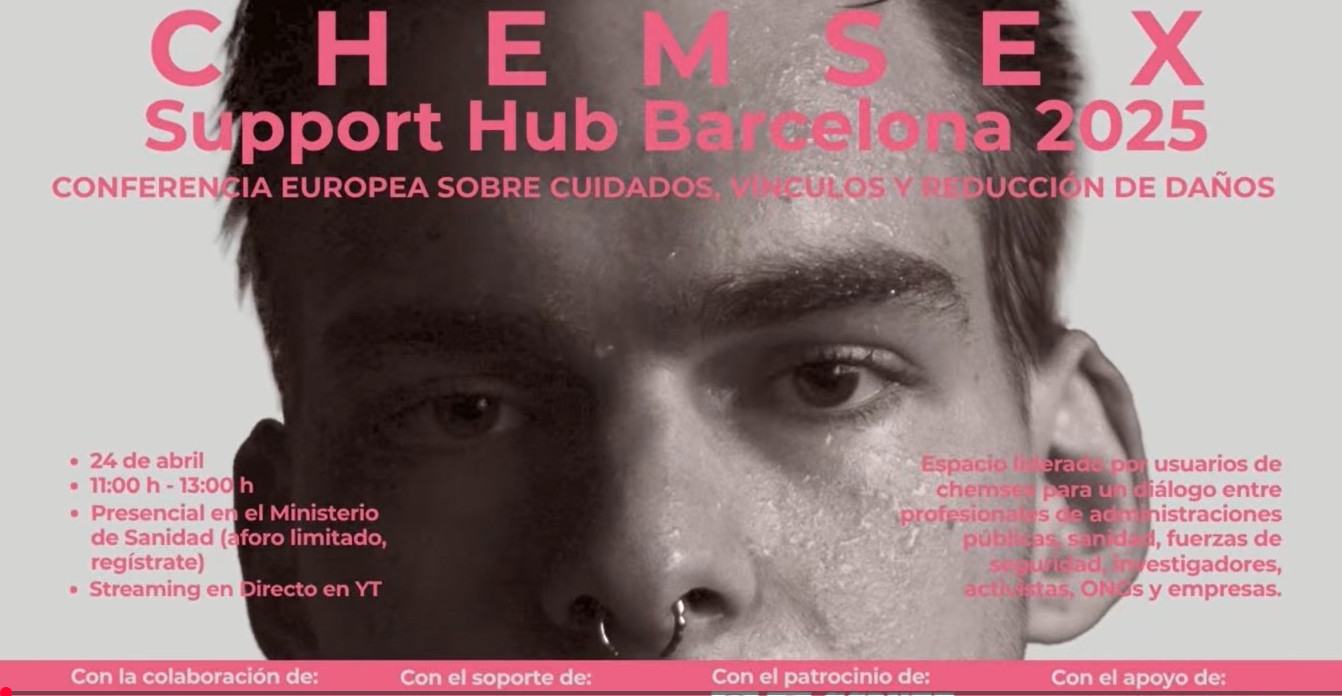
Chemsex Support Hub Barcelona 2025 : Conferencia Europea sobre cuidados, vínculos y reducción de daños
-

Valenciachemsex.org: un ecosistema digital comunitario para el acompañamiento a usuarias y profesionales en el abordaje del chemsex